Volusia County's $28.5 Million Conservation Land Deals: What They Mean for Florida Land Investors
Two closings, one day apart, took nearly 1,800 acres of Volusia County land permanently off the market — and a November ballot measure could make it harder to ever put land like it back on.
Two Deals, One Week, 1,800 Fewer Acres
Land investors spend a lot of time tracking what's coming onto the market. It's worth paying just as much attention to what's being permanently taken off it. In the first week of August 2026, Volusia County closed on two conservation land purchases — River Bend Ranch near Osteen and the Pearl of Volusia easement near DeLeon Springs — totaling nearly 1,800 acres for a combined $28.5 million, funded largely through Volusia Forever, the county's voter-approved land conservation program.
That acreage is now permanently off-limits to development, adding to nearly 60,000 acres Volusia County has protected since 1986. The deals also set new benchmark per-acre prices for waterfront and environmentally sensitive land in those submarkets — and a November 2026 ballot measure could make future conservation designations even harder to reverse, a development worth watching for anyone holding or evaluating rural land nearby.
What Volusia County Bought — and From Whom
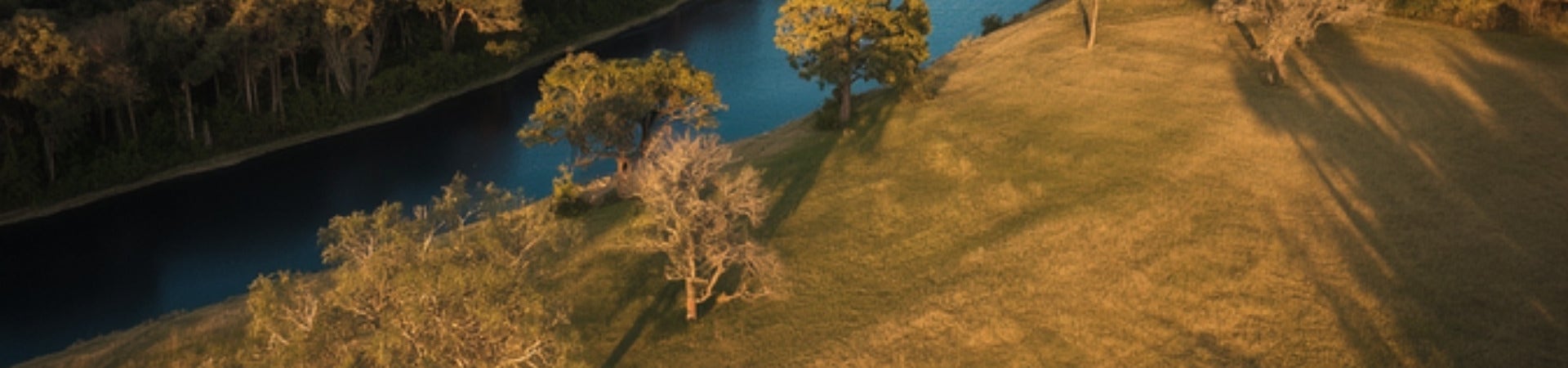
River Bend Ranch is 1,299 acres at 1411 Osteen Maytown Road, on Volusia's rural west side near Osteen. The Volusia County Council unanimously approved the $20.1 million purchase on May 5, 2026, and the deal closed August 6, 2026. The ranch, purchased from seller Alan Ashlock, carries roughly two miles of St. Johns River frontage and 1.3 miles along Deep Creek, and is documented habitat for white-tailed deer, gopher tortoises, Florida sandhill cranes, and black bears. At $20.1 million for 1,299 acres, the county paid approximately $15,470 per acre for the land outright — a fee-simple purchase, meaning Volusia County now owns the property.
Pearl of Volusia, also known as the Caraway Lake Conservation Easement, is nearly 500 acres at 1290 Blackwelder Road near DeLeon Springs, purchased from seller Scott Vanacore. The Volusia County Council approved its share of the deal in February 2026, and it closed one day earlier than River Bend Ranch, on August 5, 2026, at a total price of $8.379 million — of which the county contributed $379,000, with the balance coming through a state conservation partnership. The property surrounds Caraway Lake and connects to Lake Dias, sits within the Florida Department of Environmental Protection's Longleaf Pine Ecosystem Florida Forever project area, and is characterized by rolling pastures, live oaks, and longleaf pine sandhills along roughly 2.7 miles of lake frontage. Unlike River Bend Ranch, this was a conservation easement, not a fee-simple sale: Vanacore retains ownership of the land but has permanently sold its development rights. At roughly $17,712 per acre, it set a new Volusia County record for a conservation easement.
Maury L. Carter & Associates represented both sellers. "This is a very rare property, and it supports a tremendous diversity of plants and animals," the firm's Daryl Carter said of the land involved. Colleague Robby Doyle summed up the year more broadly: "Volusia County has done a great job conserving land this year."
What the Price Tags Tell Land Investors
The distinction between the two deals matters for anyone underwriting land in this corridor. River Bend Ranch's roughly $15,470-per-acre fee-simple price reflects large-acreage rural land with significant river and creek frontage — genuinely premium water access in a single, contiguous 1,299-acre tract. Pearl of Volusia's $17,712-per-acre record, by contrast, is for a conservation easement alone, not the land itself; the seller kept ownership and simply sold the right to ever develop it. That the county and state were willing to pay more per acre for development rights on a smaller, lake-fronted parcel than for outright ownership of a larger river-fronted one is a useful signal: lake and river frontage in Volusia's rural west side is commanding a real premium over generic rural acreage, whichever form the transaction takes.
For broader context, general editorial estimates of Volusia County's rural and agricultural land values (dated August 31, 2026, and explicitly framed as directional planning bands rather than a comp set or appraisal) put typical rural land in the range of roughly $5,000 to $20,000-plus per acre, depending on location and access. Both August closings landed at or above the top of that range — a reminder that water frontage and ecological significance can push specific parcels well past what a blended county average suggests, and that any investor pricing raw land near a river, lake, or wetland system should run comparable sales in that specific corridor rather than relying on a countywide figure.
The Bigger Supply Picture: Nearly 60,000 Acres and Counting
These two deals didn't happen in isolation. Volusia Forever was created in 2000, when county voters approved a self-imposed 0.2-mill property tax dedicated to land conservation, and renewed it in November 2020 for another 20 years. Combined with the county's earlier Environmental and Endangered Lands Program, dating to 1986, Volusia County has now conserved nearly 60,000 acres — land that will never be platted, rezoned, or sold to a developer.
For land investors, that's a supply story as much as a conservation story. Every large, contiguous, water-fronted parcel the county or state acquires is one that will never compete with a developer's offer again — and Volusia Forever's transparency dashboard shows the program continues accepting applications year-round for environmentally sensitive land, working forests, and farmland. Large-acreage tracts with river or lake frontage, of the kind River Bend Ranch represents, are increasingly likely to draw a conservation offer before they ever reach the open market for subdivision. That tightens the long-run inventory of assemblage-scale rural land in Volusia's western and southwestern reaches — precisely the kind of land that has historically fed the county's development pipeline.
A November Ballot Measure Land Investors Should Watch
On November 3, 2026, Volusia County voters will decide a related question: whether to create a conservation lands registry that would require a supermajority — five of the county council's seven members — to ever remove, sell, or transfer a registry-listed conservation property. Today, a simple majority of four votes is enough.
The measure includes a "public purpose" exemption that has drawn scrutiny: registry-listed land could still be repurposed for things like fire stations, drainage easements, or solar farms without triggering the supermajority requirement. Resident Catherine Pante has called the exemption a potential "gift" to developers, arguing it could let listed land change use without the added protection the measure is meant to provide. An alternative proposed by County Council Chair Jeffrey Brower — requiring a unanimous council vote and skipping the registry structure entirely — was tabled on a 4-2 vote.
Bottom Line: If the registry measure passes, land already inside Volusia Forever's roughly 60,000 protected acres becomes structurally harder to ever bring back to market, reinforcing the scarcity of large, developable, water-adjacent tracts elsewhere in the county. If it fails, the status quo simple-majority process continues, leaving somewhat more flexibility — at least on paper — for future councils to revisit conservation designations. Either way, investors holding or evaluating land near existing Volusia Forever parcels should track the November 3 outcome.
Where This Leaves Developable Land Near Osteen and DeLeon Springs
Land near a newly conserved parcel isn't itself protected — but it isn't unaffected, either. Proximity to permanently conserved river, creek, and lake frontage can function as a real amenity for adjacent parcels: protected views, informal trail or water access, and reduced flood-related development risk on the conservation side of the property line. At the same time, the state's interest in the Pearl of Volusia tract — part of its broader Longleaf Pine Ecosystem Florida Forever project area — signals that Tallahassee sees conservation value extending beyond this single parcel around DeLeon Springs, which is worth watching for landowners and investors holding adjacent or nearby acreage who may eventually field a similar offer themselves.
The Investor Takeaway
Volusia County just removed nearly 1,800 acres of rural, water-fronted land from its development pipeline in a single week, at prices — roughly $15,470 per acre for fee-simple river frontage and a record $17,712 per acre for a lake-fronted conservation easement — that sit at or above general estimates for rural land values in the county. That tightens the long-run supply of large-acreage, water-adjacent parcels in Volusia's western reaches, a trend nearly 60,000 acres of cumulative Volusia Forever and Endangered Lands Program conservation has been building since 1986. Before underwriting land near the St. Johns River, Deep Creek, Caraway Lake, or Lake Dias corridors, investors should run current comparable sales for the specific submarket rather than a countywide average, and watch the November 3, 2026 conservation lands registry vote — its outcome will shape how durable Volusia's conservation designations are going forward, and by extension, how scarce the remaining developable acreage nearby becomes.
Work With Newkirk on Land and Development Deals
Newkirk Investments is headquartered in Ormond Beach and works land, development, and investment deals throughout Volusia County and across Florida. If you're evaluating raw land near Osteen, DeLeon Springs, or elsewhere in Volusia's rural corridors — or want a second opinion on whether a parcel's price reflects real comparable sales — connect with the Newkirk team at newkirk-investments.com, by phone at 386-290-5356, or at hello@newkirk-investments.com.
SOURCES
- GrowthSpotter — Volusia County secures 1,800 acres of conservation land in two deals, August 18, 2026
- West Volusia Beacon — Two conservation deals protect nearly 1,800 acres in Volusia
- Observer Local News — Volusia County Council OKs $20.1 million Volusia Forever purchase in Osteen, May 5, 2026
- WMFE/Central Florida Public Media (cfpublic.org) — Volusia council votes to conserve 1,299 acres along the St. Johns River, May 5, 2026
- Central Florida Public Media (cfpublic.org) — Conservation lands registry? Volusia County voters will decide, June 17, 2026
- Volusia County — Volusia Forever program page
- Pass Florida Real Estate — Florida Land Cost Per Acre by County: 2026 Price Table, August 31, 2026
- Florida Department of Environmental Protection — Florida Forever program




Responses