Straight from the 2026 Florida Realtors Convention & Trade Expo: the transaction failures that actually end up in a complaint file — and the three habits that prevent most of them.
The Deposition Starts Long Before the Lawsuit
Most agent legal trouble doesn't start with a dramatic mistake. It starts with something small that nobody wrote down — a verbal extension, a "we'll figure out the septic thing later," a buyer agreement nobody re-read before a showing. By the time it becomes a complaint or a lawsuit, the agent is trying to reconstruct a conversation from six months ago.
At the 2026 Florida Realtors Convention & Trade Expo, held in Orlando in August, the association's legal team walked members through exactly where those failures tend to happen — and how to close the gap before it opens. Speaking on the record were General Counsel Juana Watkins, Associate General Counsels Maria Marchante, Heather Rhodes, and Joel Maxson, and attorney Shannon Allen. Their guidance, published by Florida Realtors on August 20, 2026, boiled down to three habits: address issues early, put agreements in writing, and ask before you assume. Everything else in the session was a specific application of those three rules — to septic systems, contract language, buyer representation forms, and NAR's dispute-resolution process.
For Newkirk agents working Florida's Panhandle, the Volusia–Flagler corridor, and everywhere in between, several of these apply directly to the kind of properties we sell. Here's the practical breakdown.
Septic Disclosure: A $15,000–$35,000 Problem Hiding in the Yard
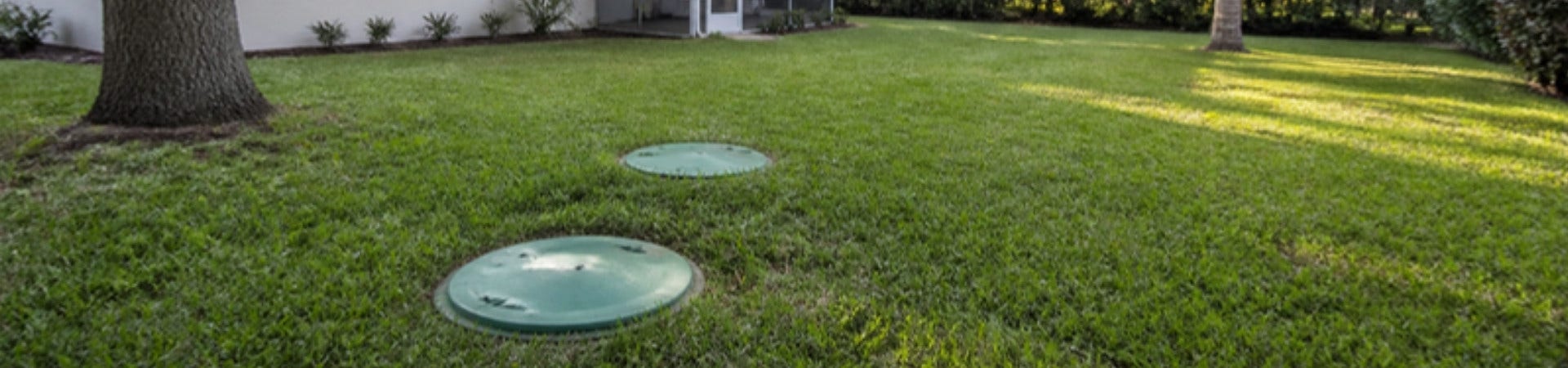
Florida has an estimated 2.6 million septic systems statewide, according to the state figures Florida Realtors' legal team cited, and water-quality requirements for those systems vary by county and by watershed. Associate General Counsel Heather Rhodes told agents to use the Florida Department of Environmental Protection's mapping tools to check whether a listing sits in an area with enhanced nutrient-reduction requirements before a buyer ever writes an offer — because retrofitting a conventional septic system to meet those standards can run $15,000 to $35,000.
That's not a footnote. On a $350,000 property, an unexpected enhanced-septic retrofit can wipe out a buyer's entire contingency budget — and turn a clean closing into a renegotiation or a walked deal.
Bottom Line: If you're listing or showing property outside a sewered service area — which describes a meaningful share of inventory in Santa Rosa County, unincorporated Escambia County, and parts of Flagler and Volusia County — check the septic system's location and status against FDEP's mapping data before the property goes under contract, not after.
"Get It in Writing" Isn't a Cliché — It's the Whole Case
Associate General Counsel Maria Marchante's section centered on a Broward County case where an unsigned addendum created exactly the kind of ambiguity that turns a routine closing delay into a dispute: one party believed a deadline had been extended, the other didn't, and there was nothing signed to settle it. Her guidance was blunt — verbal extensions and modifications are not enforceable protection for anyone, including the agent standing between two parties who each remember the conversation differently. She also flagged that contract language precision matters down to punctuation placement, not just substance.
Pro Tip: Any time a deadline, price term, or condition changes after a contract is signed, put it on a Florida Realtors modification form and get both signatures before proceeding as if the change is in effect — not after.
Know What You're Actually Signing (and Handing a Buyer to Sign)
Joel Maxson's portion reviewed the buyer representation agreement forms Florida Realtors introduced roughly two years ago and reminded agents to actually know which version of the form they're using and what obligations it creates — for both the agent and the buyer. This matters more than it used to: as of January 5, 2026, Florida Realtors also rolled out a broader forms refresh, including combined compensation forms (CASSB-1 and MCSB-1) and updates across eleven listing and lease forms to reflect NAR's Multiple Listing Options for Sellers policy, new buyer-agreement technology acknowledgments, and the removal of outdated credit-check language. Older versions of these forms are no longer available through Form Simplicity — meaning an agent working from a saved template instead of the current library could unknowingly be using a form the MLS and the association have already superseded.
NAR's Dispute Process Is Changing, Too
Attorney Shannon Allen's portion of the session covered recent National Association of Realtors action on arbitration, complaint handling, and dispute-resolution procedure. Florida Realtors also announced a new Law & Audio series — short, accessible answers to frequently asked legal questions — as a standing resource for members going forward, rather than a once-a-year convention briefing.
The Agent Takeaway
None of this requires a law degree. It requires a habit: when something changes, write it down and get it signed; when a property has a feature that could cost a buyer real money, check it against the state's own data before it becomes a surprise; and when you're not sure which form applies, ask Newkirk's broker team before you hand a client a document you haven't reread recently. The agents who avoid complaints aren't the ones who never encounter these situations — they're the ones who document the encounter.
Work With Newkirk
Newkirk Investments trains agents to treat this kind of update as standard practice, not a once-a-year compliance chore — because the brokers who catch a septic disclosure gap or an unsigned addendum before closing are the ones clients come back to. If you're a Florida agent who wants to work at a brokerage that takes transaction risk and agent education seriously, reach out to Newkirk Investments at 386-290-5356 or hello@newkirk-investments.com, or learn more about joining the team at newkirk-investments.com/contact.
Sources
- Legal update gives Realtors practical ways to reduce risk — Florida Realtors, August 20, 2026
- Florida Realtors Rolls Out New, Updated Forms — Florida Realtors, January 2026
- Multiple Listing Options for Sellers — National Association of Realtors
- Florida Department of Environmental Protection — Onsite Sewage Program





Responses